Every student has struggled with their sleep schedule at some point, coming back from winter break, students and staff both struggle with the readjustment. Scientists prove that the brain will eat itself from a lack of sleep. Neuroscientists found that with constant lack of sleep, the brain will perform phagocytosis, where the immune cells start digesting their own synaptic connections.
Waking up early, especially to a sudden alarm, can leave many people feeling drained. Consistently rising early for school or work contributes to sleep debt, which negatively affects the nervous system.
The transition from winter break causes sleep schedules to be disrupted, and it affects students upon coming back to school.
“Students are still growing and developing, and so teenagers need nine hours of sleep, and it’s hard because of waking up early for school,” nurse Wendy Coleman said. “It’s your development and growth and day-to-day ability to be the best you could be, learning, sports and everything you’re doing,”
Lack of sleep not only affects school life, but it also consistently affects students’ long-term health.
“Lack of sleep can impact (students) in so many ways—from health and focus to long-term growth,” Coleman said. “In adults, we see it affecting stress levels, heart condition, brain function and hormones.”
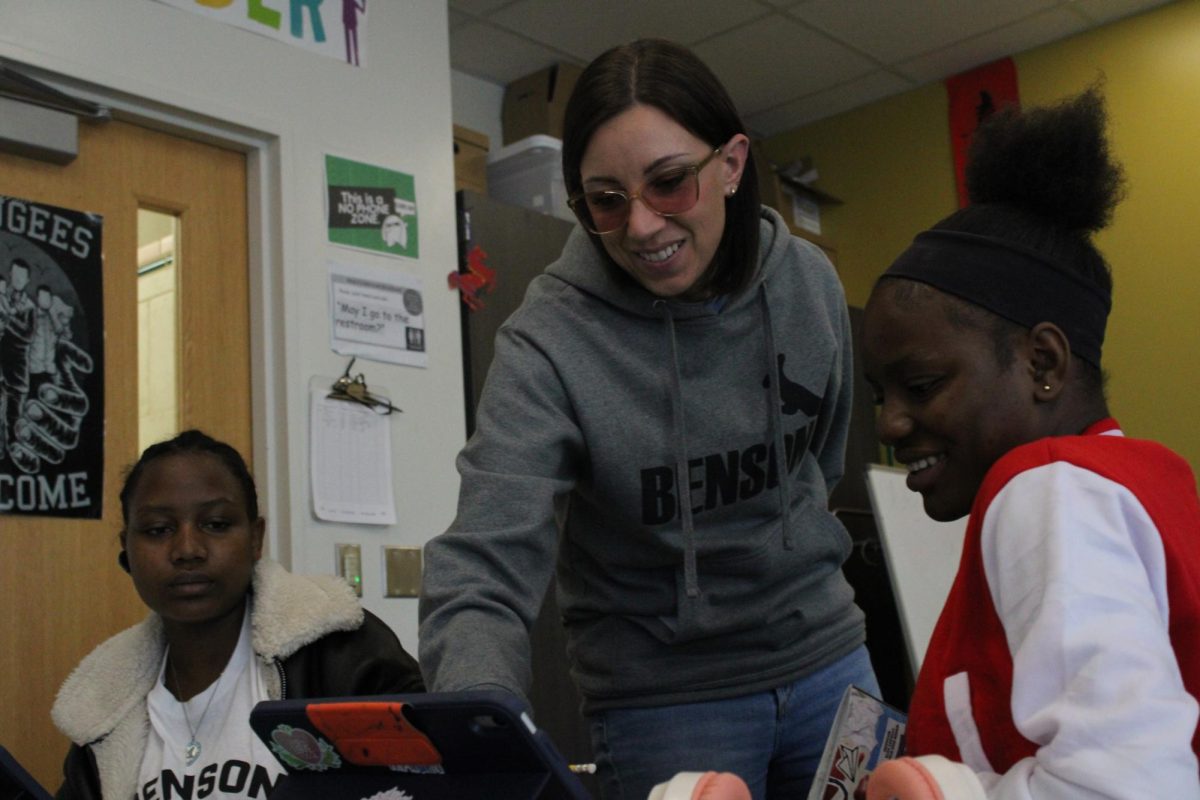
Coleman’s concerns are not just theoretical; they are the daily reality for students like senior Beysi Sierra. She gets an average of four hours of sleep and relies on a different kind of chemistry to get through the day.
“I try to interact with my friends and have a conversation with them to stay awake in class,” Sierra said. “Winter break changed my schedule; we have a lot of free time during breaks, and the transition from that back to school is bad.”
Not only do students have a bad sleep schedule, but adults also struggle.
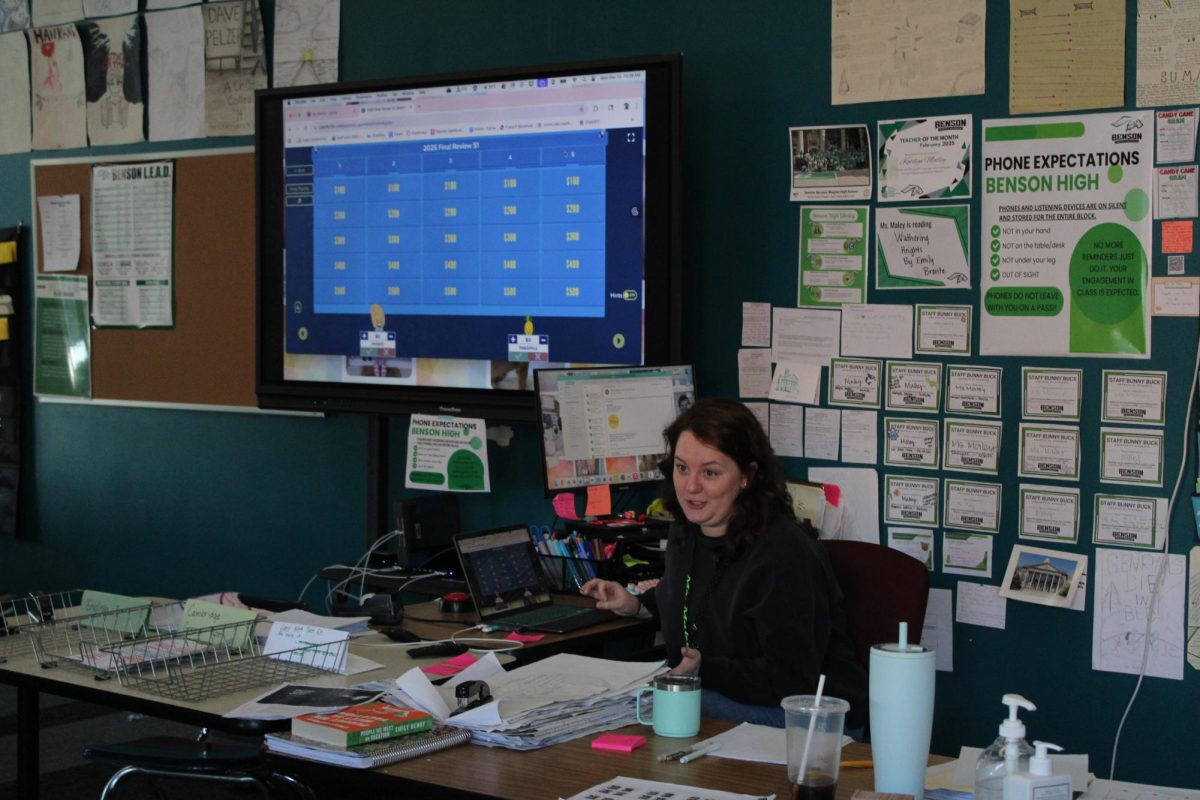
“I sleep an average of six and a half hours,” curriculum specialist Angela Johanek said. “I have kids that won’t go to bed, and I have to get up early and get my kids up early.”
Despite her own sleep deficit, Johanek arrives at Benson with a bright smile and a positive attitude. But she admits that the recent winter break created a difficult transition for everyone.
“I think (the break) completely disrupts the sleep schedule,” Johanek said. “It makes you want to sleep later and wake up later.”
Even the teachers who know science find it a challenge. Biology teacher Hunter Jacobs prioritizes seven hours a night but admits that the life of an educator does not always make it easy.
“Because of (my) after-school activities, it makes it harder to sleep earlier,” Jacobs said.
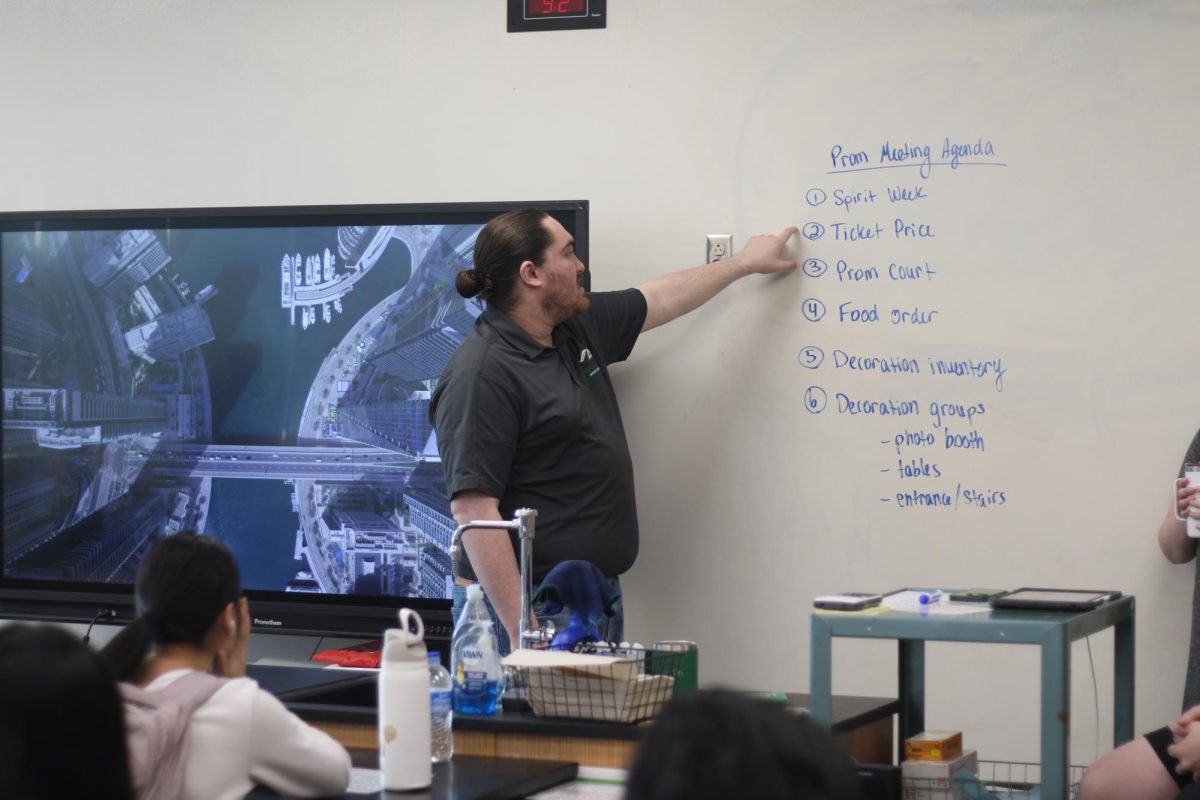
Math teacher and power-lifting coach, Caleb Kleven, sleeps for six hours but sets his goals to seven hours of sleep.
“The reason why I want it to be seven hours is that it’s good for recovering,” Kleven said. “It helps to gain muscle or lose fat. When working out and recovering, sleep is a beneficial factor to that.”
Regarding the winter break, the change of free will and having no plans for about two weeks gives everyone a chance to sleep in. But that can result in oversleeping, which pushes back the hours increasingly.
“People often don’t go to sleep when they should, and so most people are going to get out of their sleep schedule,” chemistry teacher Joseph Devlin said. “But it’s important to get back on your sleep schedule usually a couple (of) days before you go back to school.”
A proposed solution to this sleep debt is a later start time, an idea of Omaha Public Schools. During the 2024-2025 school year, OPS launched an initiative for a monthly “late start” Tuesday.
“It is to give staff time to collaborate with their PLC, (professional ground learning community) and to work on school improvement,” principal Melinda Bailey said.
This helps give teachers more time to be able to plan their lessons.
“I think they’re sleeping too much because they’re still signing in to class late,” assistant principal Catherine Chapman said. “I don’t know if it’s improving (attendance) because it’s not changing their sleep, but they do come to school in a better mood from their extra two hours of sleep.”